Blueleaf Inc. 508-248-7094 | egrotton@blueleafwater.com
Our Projects
Over the past 25 years, Blueleaf has completed more than 400 pilot studies across the United States, Canada, and Central America — testing treatment processes for iron, manganese, arsenic, PFAS, organics, and nutrient removal, among other challenges. The projects below are a sample of that work: real water sources, real treatment questions, and the data that answered them.
The Project: Philip J. Holton Water Purification Plant (180 MGD)
Relevant Details
Major Objectives
Seasonal manganese removal
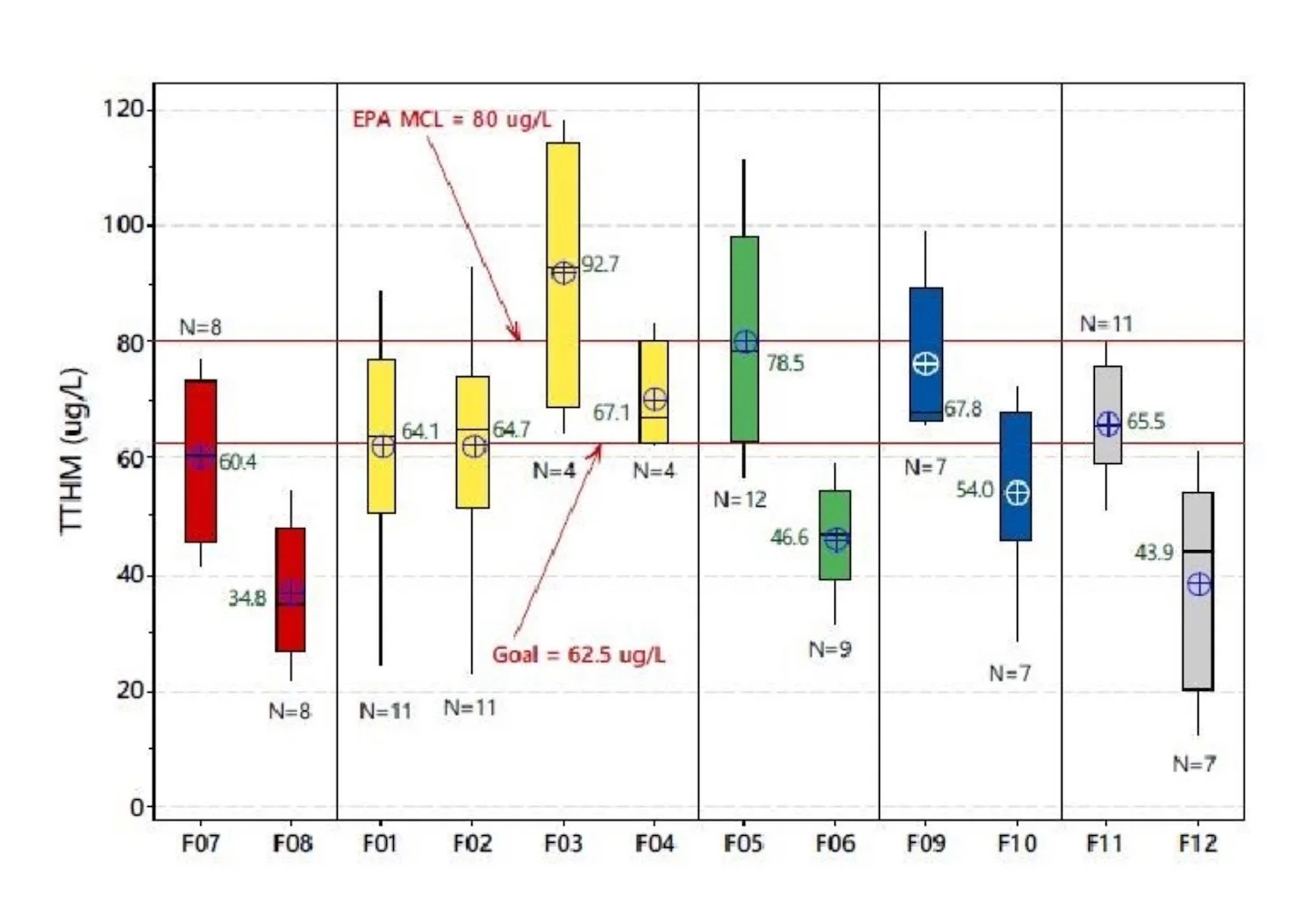
TTHM formation reduction
Processes
Ozone (both pre– and intermediate)
Chlorine Dioxide
Potassium Permanganate
Dissolved Air Flotation
MIEX Anionic Exchange
Conventional Settling with Plates
Powdered Activated Carbon
Biofiltration
Sand/Anthracite Filtration
Granular Activated Carbon
Duration
12 Months, 4 seasons
Dates
November 2014 to December 2015
Principal/Project Manager
Erik Grotton
Aaron Davis
Location
Hope, RI
Overview
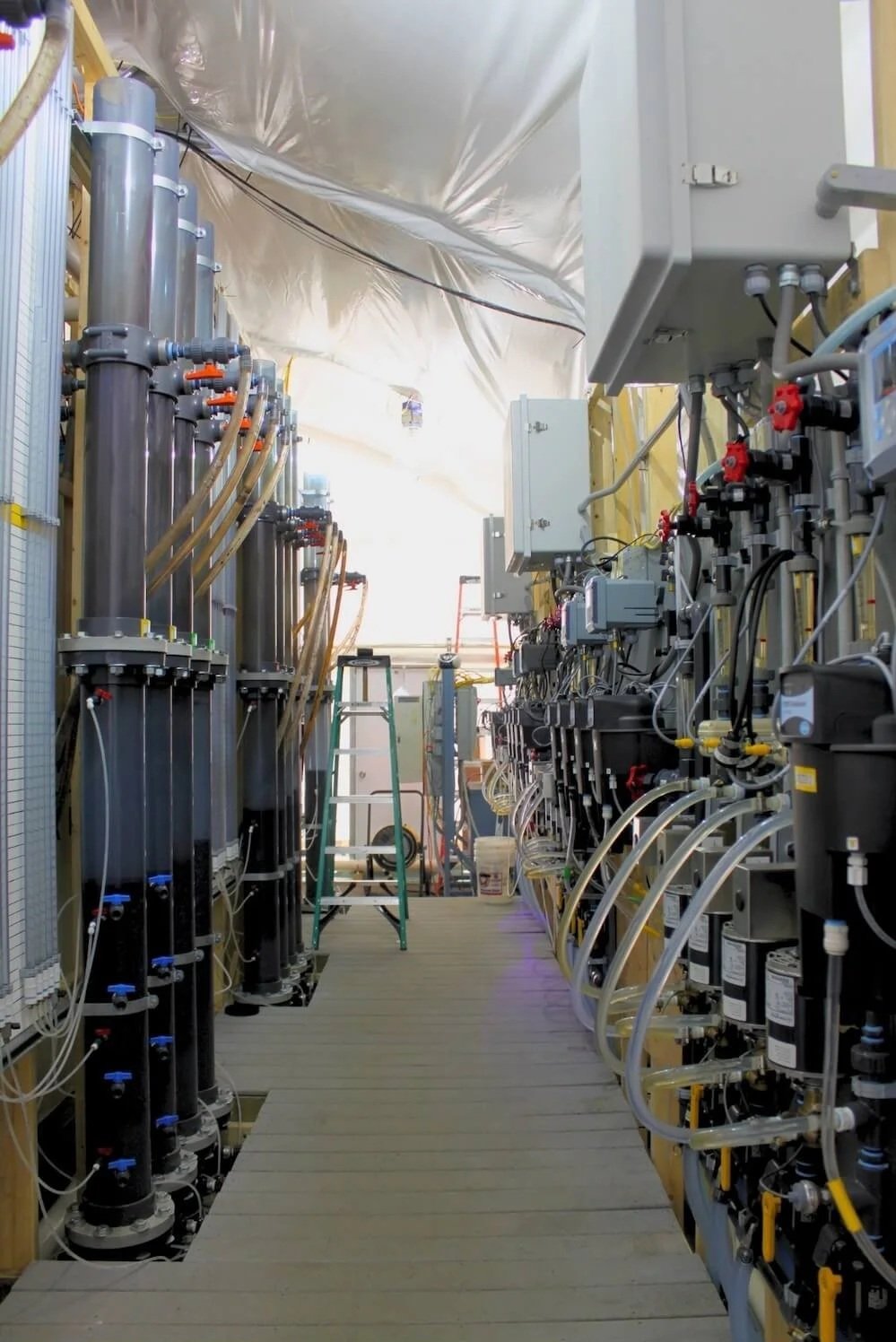
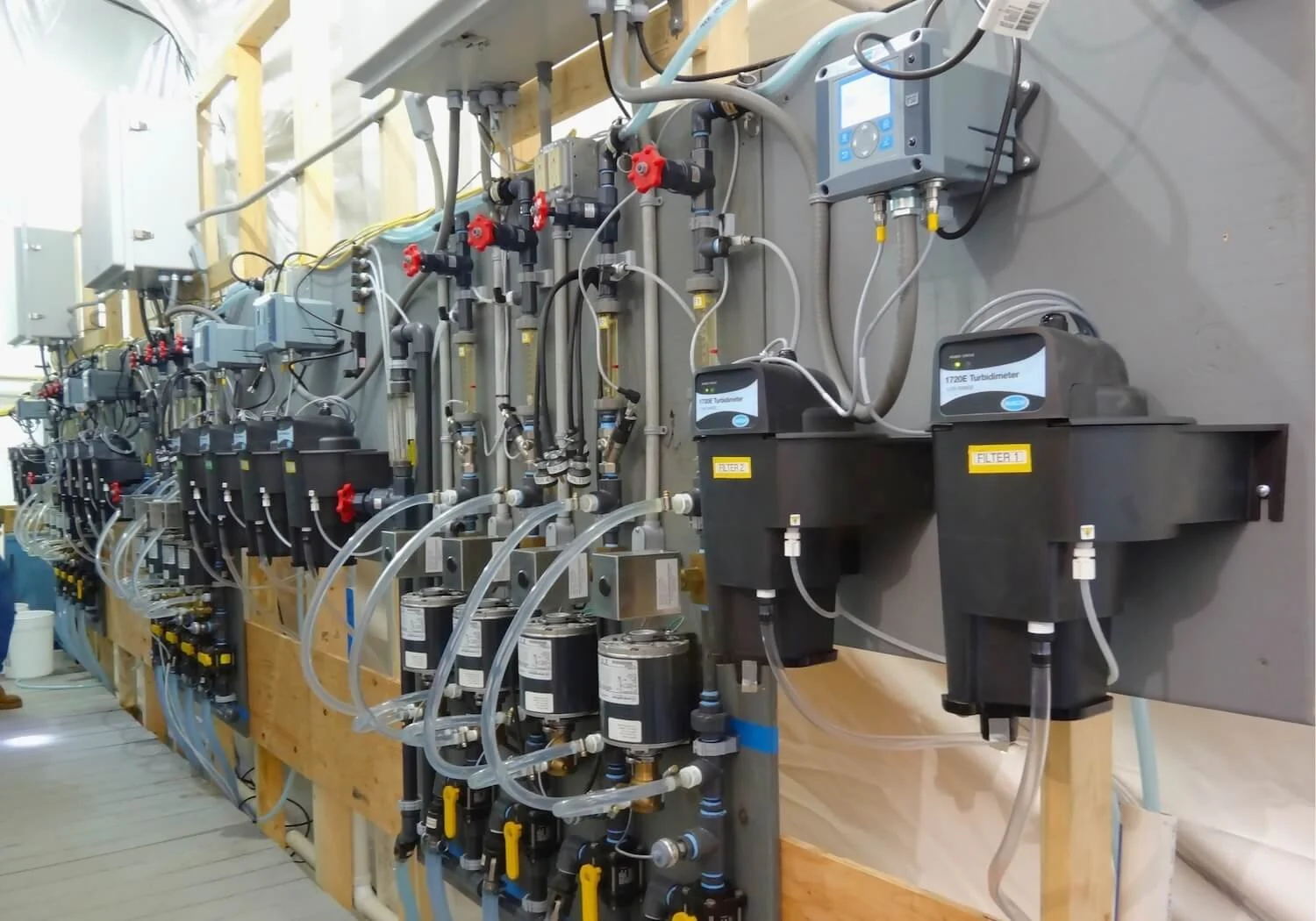
Bench Scale testing was performed to determine ozone demand and decay, and to preselect coagulant types and doses. Five alternative pretreatment trains were piloted over four seasons. Each process train was selected to evaluate a new process for manganese removal, and for NOM removal. One process train was also operated as a control to represent the existing full-scale treatment system.
Train 1: MIEX pretreatment for organics removal, potassium permanganate addition for manganese oxidation, polyaluminum chloride addition for coagulation and flocculation, pH adjustment and gravity filtration.
Train 2: Oxidation with ozone, coagulation with ferric sulfate, pH adjustment, High Rate Plate Settler for clarification, and gravity filtration.
Train 3: Oxidation with potassium permanganate, coagulation with ferric sulfate, pH adjustment, Powder Activated Carbon for organics removal, High Rate Plate Settler for clarification, and gravity filtration.
Train 4: Oxidation with chlorine dioxide, ferric sulfate for coagulation, Powder Activated Carbon for organics removal (two alternate doses), pH adjustment, Roberts Enflo-DAF™ dissolved air flotation pilot process for clarification, and gravity filtration.
Train 5: Full Scale coagulation and settling followed by pilot scale filtration.
Major Findings
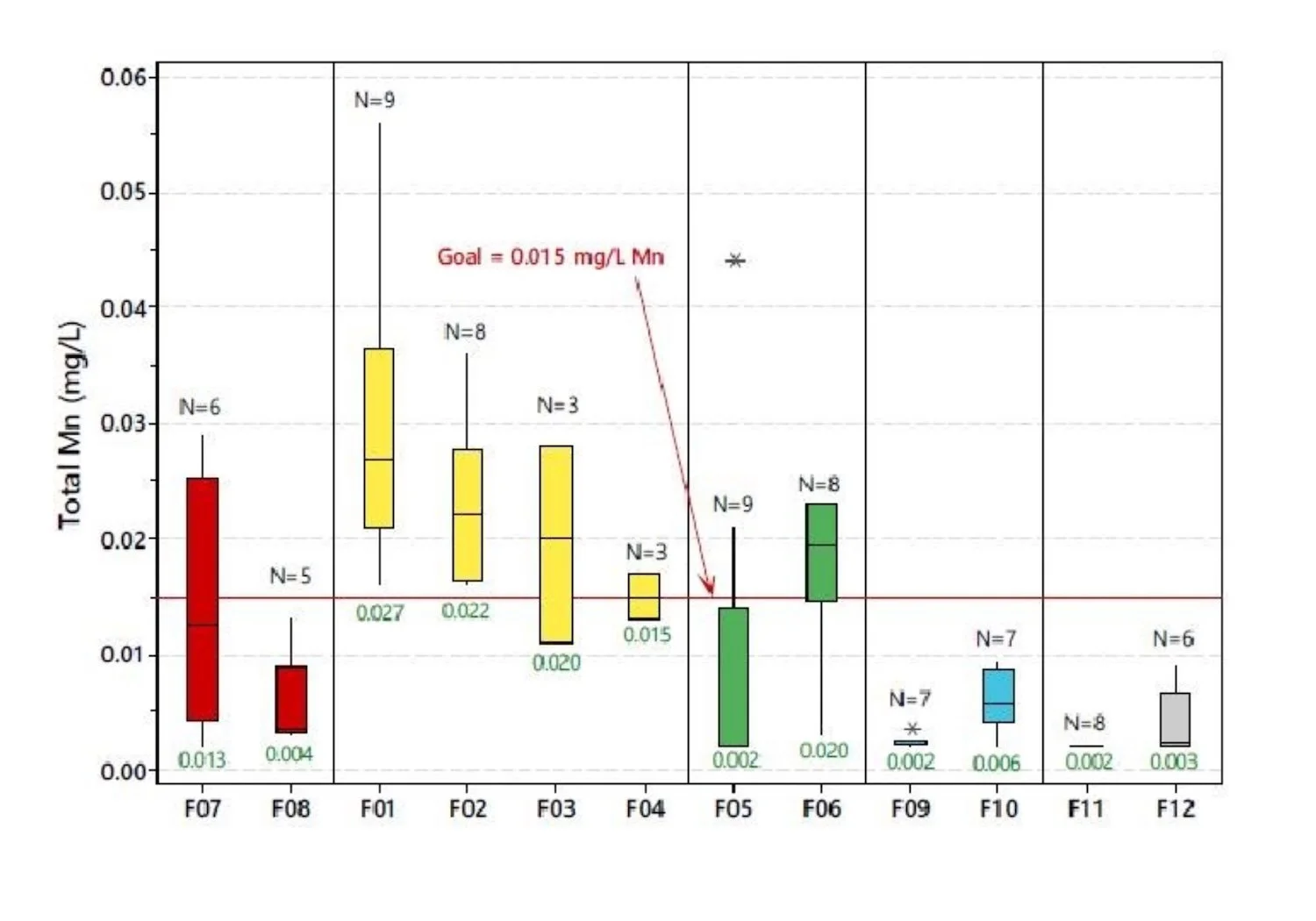
Three of the process trains reduced the TTHM formation significantly, especially when operated with low-rate filters.
Ozone was unable to precipitate dissolved Mn when operated as the primary disinfectant, or as an intermediate step.
Potassium permanganate was effective at Mn removal, as was continuous feed of chlorine upstream of the filters with a filtered water pH that exceeded 8.

Relevant Details
Major Objectives
Seasonal algae removal
TTHM formation reduction
Processes
Ozone (both pre– and intermediate)
Chlorine Dioxide
Potassium Permanganate
Dissolved Air Flotation
MIEX Anionic Exchange
Conventional Settling with Plates
Membrane Filtration
Biofiltration
Sand/Anthracite Filtration
Granular Activated Carbon
Duration
10 Months, 5 seasons
Dates
April 2009 to October 2009
May 2010 to July 2010
Principal/Project Manager
Erik Grotton
Aaron Davis
Location
Portsmouth, RI
Newport, RI
The Project: Lawton Valley, Portsmouth RI (6 MGD) and Station 1, Newport RI (9 MGD) Water Treatment Plants
Overview
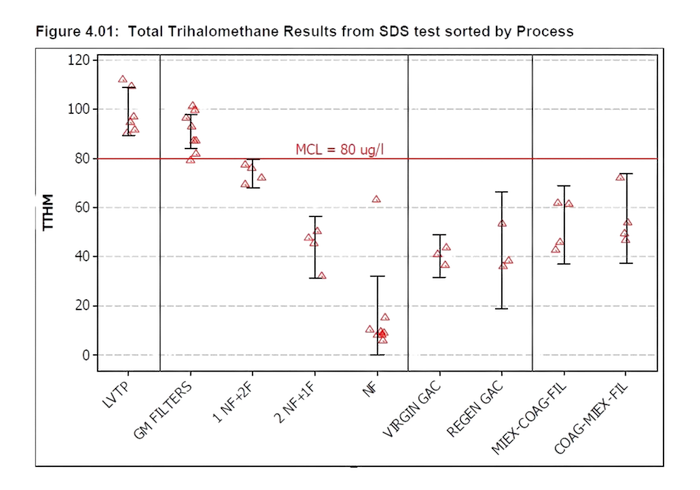
Pilot Studies were conducted over five seasons using water from 5 separate reservoirs. An initial study included the evaluation of chlorine dioxide, ozone, alum, polyaluminum chloride, Dissolved Air Flotation, clarification with plate settlers, granular media filtration, vacuum membrane filtration, nanofiltration, and biologically activated carbon filtration. The initial study eliminated several processes from further consideration due to the inability of the process to handle algae, reduce TTHM precursors, or show a significant advantage in water treatment. A second study was completed to (1) provide a demonstration period for the nanofiltration process, (2) to demonstrate the effectiveness of the DAF process and granular media filters as pretreatment for the nanofilters, (3) to evaluate the effectiveness of the MIEX magnetic ion exchange process, and (4) to evaluate virgin carbon and regenerated carbon for filtration. A further goal was to evaluate the processes during a season with raw water which represented the historically challenging raw water at the Lawton Valley Treatment Plant.
Major Findings
Results showed that at least four processes were able to meet treatment goals for disinfection byproduct precursor removal, reliably reducing Simulated Distribution System Total Trihalomethane concentrations below 80 µg/L. These processes were (1) nanofiltration, (2) virgin granular activated carbon, (3) regenerated granular activated carbon, and (4) MIEX magnetic ion exchange. These processes also met other treatment goals for removal of iron, manganese, and turbidity. The raw water supply had a fairly severe problem with taste and odor complaints during the pilot season, and a single round of samples showed that the nanofiltration process was able to reduce geosmin to acceptable levels.
The Project: Merrimack River Radial Collector Well (5 MGD) Manchester Water Works
Relevant Details
Major Objectives
Dissolved Iron and Manganese Removal
NOM and DBP Precursor removal
Processes
Oxida on with KMnO4
Pressure Membrane Filtra on
Immersed Membrane Filtra on
Duration
4 weeks
Dates
January to February 2017
Principal/Project Manager
Erik Grotton
Fred Lusky
Location
Manchester, NH
Overview
The Radial Collector Pilot Study evaluated chemical oxidation and two treat-
ment alternatives for treating water from the new radial collector well. Pro-
cesses included:
pH adjustment and potassium permanganate (KMnO4)
Filtration through a pressurized membrane system supplied by PALL, and an immersed membrane system supplied by GE Water and Power.
A comparison of the effectiveness of intermittent chemical cleaning with citric acid and with sodium hypochlorite.
Major Findings
Potassium permanganate was effective at the oxidation and precipitation of dissolved Mn
Membrane filtration met water quality goals for inorganics (Fe and Mn) removal, and all measurements for organic contaminants stayed below target values in the influent water
Both membrane processes operated for over 30 days without the requirement for a Clean in Place. Both membranes recovered permeability after CIP processes
Representatives from both membrane vendors demonstrated the procedures for locating and repairing membrane breaks within their systems.
Every project starts differently. What stays consistent is the approach: independent testing, careful analysis, and a straight answer about what the data shows. If you're weighing a similar decision, we're happy to talk through what a pilot study for your project might look like.