
|
Blueleaf Incorporated
General Field Rules for Conducting Pilot Studies on
Water and Wastewater Treatment Processes
1. Let data speak for itself.
The history of science is filled with examples of great advances being made by accident. Things from penicillin, X-rays, Post-it notes and Velcro were invented or discovered when it was not expected. Never discard data that doesn't make sense. Write down the numbers that you get.
2. Maintain independence and impartiality.
Never allow business relationships to cloud the results. The worst outcome for a pilot is to install a full scale system that doesn't work. Be honest and candid in the evaluation of all treatment processes. Do not overstate the effectiveness or advantages of our client’s processes, nor understate or misrepresent products we do not represent. Do not enter into contractual relationships that provide a financial benefit for the success of any process.
3. Identify and eliminate sources of bias.
Sources of bias can be subtle, from the desire to find a solution, to scratches on sample vials. Randomize the order of trials, sample locations, and all other appropriate parameters to guarantee inferential validity in the face of unspecified disturbances. Use blocking to eliminate unwanted sources of variability.
4. A clean pilot is a happy pilot.
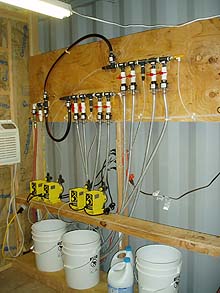
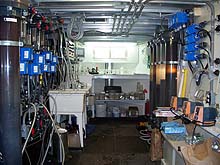
Most people that judge pilots have not performed pilot work in the past. Without the experience, people make judgments based on the way things appear. Make things look clean and well organized whenever possible.
5. Document everything.
All pilot experience is useless unless it's documented. Operating a pilot without the collection of data or written observation is not useful. Write down everything, even if it seems trivial at the time.
6. Blame it on pH.
Always measure pH, and look to pH first as the most likely culprit when things are not working.
7. Make timely reports.
Data gets stale, and the report becomes un-interesting very quickly. Clients are pleased with timely reports, and annoyed with long delays. Work on the report when you are on-site, and demand time to finish one report before beginning the next project.
8. Keep clients involved.
Develop relationships with Consulting Engineers and become a resource for them to outsource specific skills and tasks. Do not compete with clients or interfere with their client relationships. The relationship with the client is more important than the financial success of any one project.
9. Have a plan.
The field is a terrible place to make decisions. Set goals for the study and daily goals for each day. Use good experimental designs to maximize the usefulness of the data.
10. Advance science.
Use the scientific method – make a hypothesis, prediction, experiment, repeat…
|
|